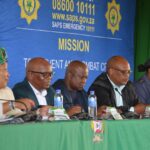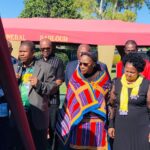

The Joe Gqabi District Municipality (JGDM) yesterday, 18 February, hosted the 2026 Joe Gqabi Tourism Conference in Nqanqarhu, Elundini Local Municipality – marking a decisive and strategic shift in positioning tourism as a central pillar of the district’s economic growth and long-term prosperity.
The conference, held under the theme “A Competitive, Innovation-Driven, Sustainable and Inclusive Tourism Future,” signals a deliberate intervention aimed at unlocking the district’s vast yet underutilised tourism potential.
Stakeholders from government, the private sector, communities and investors convened to align efforts around a unified tourism growth strategy.
The conference signals the launch of a new economic trajectory for the Joe Gqabi District, one where visitors stay longer, businesses grow stronger, young people find employment locally and communities directly benefit from a thriving tourism economy.
Tourism has been identified as a key sector capable of diversifying the district’s economy, which has historically been anchored in agriculture. JGDM Municipal Manager, Mr Mcebisi Nonjola, emphasised the importance of the tourism sector, saying “tourism retains and circulates wealth within local communities by supporting accommodation establishments, small businesses, transport operators, guides, cultural practitioners and rural infrastructure development”.
The conference was further designed to produce tangible outcomes, including the identification of bankable projects, investment opportunities and the integration of Small, Medium and Micro Enterprises (SMMEs) and cooperatives into the tourism value chain.
Cllr Unathi Hlathuka, JGDM Member of the Mayoral Committee for Finance, highlighted the municipality’s commitment to developing an actionable implementation programme with measurable results, shifting the focus from discussion to delivery. “Tourism growth must be community-centred, ensuring that benefits extend broadly across society. Plans include supporting trained and accredited local guides, homestays and village experiences, township and heritage routes, youth-owned adventure enterprises and women-led craft and cultural markets,” she remarked.
Deliberations focused on the legislative and regulatory framework guiding local government tourism, the current tourism status quo, and alignment with key planning instruments such as the Integrated Development Plan (IDP) and the District Development Model (DDM) One Plan.
Joe Gqabi District is uniquely positioned as a destination of landscapes, heritage and adventure. The highlands of Rhodes and Barkly East, together with the escarpments of the Drakensberg, offer world-class opportunities for hiking, trail running, mountain biking, fly-fishing and eco-tourism. The Orange River and Gariep waters in the Walter Sisulu Local Municipality support boating, water sports and leisure tourism, while local hot springs and nature reserves provide sought-after wellness experiences.
Notably, the district is home to the site of South Africa’s only mountain ski resort, located in Senqu Local Municipality – closed since 2020, yet unmatched in its potential. Reviving this facility is not a dream, it is bankable opportunity waiting for the right partnership.
A major milestone for the district is the recent proclamation of the Grasslands National Park within the Eastern Cape Highlands. As South Africa’s newest national park, situated near Rhodes and Barkly East, it elevates Joe Gqabi onto the national and international tourism map while protecting rare grassland ecosystems and critical water source areas.
Lwandile Dube, Acting Local Economic Development Manager at Elundini Local Municipality, explained that “the national park’s model enables farming communities to remain active partners in conservation, creating direct opportunities in guided hiking, birding, fly-fishing, adventure sports, homestays and cultural tourism.”
The park positions the district as an emerging tourism destination capable of attracting longer-staying visitors, unlocking investment and generating sustainable rural employment.
Despite these assets, visitor numbers remain modest and predominantly domestic, highlighting challenges in coordination, packaging, infrastructure and marketing. The conference has therefore prioritised the development of a refreshed tourism development and marketing programme, skills development initiatives for local communities and strengthened partnerships across government and the private sector.
Investors were encouraged to consider Joe Gqabi’s unique value proposition: high-value tourism experiences in a low-congestion environment, cross-border tourism opportunities with Lesotho, untapped adventure tourism markets and expanding domestic tourism demand. The Municipality reaffirmed its commitment to reducing investment risk and enabling development through supportive policy and infrastructure.
Break-away sessions further explored district branding under the Eastern Cape Highlands identity, as well as tourism product development and marketing strategies.
The conference concluded by calling for concrete commitments, funded projects, signed agreements and the adoption of key resolutions that will transform the district’s mountains, rivers and heritage into engines of inclusive and sustainable growth.